Celebration and Recognition: UW alum chosen to create Indigenous Peoples Day Mural
| September 23, 2026
In honour of National Indigenous Peoples Day, the City of Waterloo partnered with UW sexuality, marriage, and family and Indigenous studies alum Maddie Bernard-Resmer to create a public mural in Waterloo Public Square, which was unveiled on June 21. “The goal of my art is for people to see themselves, to see their stories represented, and to feel that they have a place [in the community],” they said.
Bernard-Resmer, who is from the Pìkwakanagàn First Nation and Kitigan-Zibi First Nation, is a Two-Spirit creator with mixed-Anishinàbe and Bear Clan heritage. They have been an artist since childhood, implementing Indigenous teachings into their past, present, and future creations. The mural they created for this year’s Indigenous Peoples Day, “wànakìwin: harmony between relations,” features animals who are native to the Haldimand Tract Treaty Territory where KW is located.
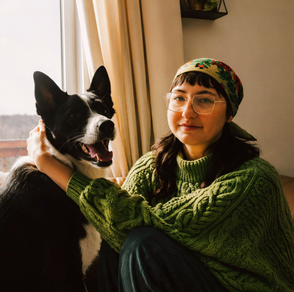
Maddie Bernard-Resmer, artist of this year’s Indigenous Peoples Day Mural.
In their mural, Bernard-Resmer wanted to show the harmony between different parts of nature that don’t typically interact by illustrating it in a single shared space. To highlight this, cattails, mushrooms, a cloud, and a rainbow are included in the mural alongside a variety of wildlife. The bear represents the protective nature of the Bear Clan and its interest in being providers and teachers of medicine. The fox illustrates the joy that comes from playful people who bring upbeat energy to their inner circles, as well as their cunning sides. The heron portrays the independence of people who watch over others in their communities.
“The message that I hope the piece conveys is that harmony is possible, but it takes work. It takes showing up in community. It means engaging with conflict or having to work with people you are out of alignment with sometimes,” Bernard-Resmer explained. They call on people to not paint each other with the same brush in recognition of society’s desire to categorize individuals into the same boxes that strip them of their personhood. To combat this division, Bernard-Resmer urges others to show up as their fullest selves in all aspects of their lives.
The mural’s colour palette consisting of vibrant blues, pinks, purples, and oranges stems from Bernard-Resmer’s gravitation towards bright colours and rainbow colour schemes. They call this gravitation a self-fulfilling prophecy, as their Algonquin name Kekekons Nimid-Tagwanibisan translates to “Hawk Child Dances with Rainbows.” Bernard-Resmer hopes that the contrast between the mural’s vibrancy and the grey concrete it is painted on catches the viewer’s eye.
An Indigenous teaching Bernard-Resmer shared related to animals and rainbows surrounds the raven. In this teaching, the raven helps put out a fire, which consequently makes its wings and body become covered in ash. The dark soot and ash that the raven carries afterwards are intended by the creator to remind people of the sacrifices that the bird had made for them. “Teachings like that bring me back to a time where we saw the earth and the other parts of creation with so much life and animism. People talk about how… everything has lost a lot of character, fun, and nuance. I’m really passionate about those things. I really love stuff that stands out to the eye [and] doesn’t blend in with the rest of the world around it,” they said.
“I think that connecting with my culture, my traditions, my people remind me that we all have a place and that we don’t have to prove that, earn that, or consistently show up in a certain type of way in order to keep our position there. We just get to exist. I think that that helps me to unmask, do what feels right, and create the stuff that I want to create.”
An aspect of “wànakìwin: harmony between relations” that Bernard-Resmer wants people to closely examine is reading its artist statement. The statement further explains the mural’s elements, and parts of it are written in Bernard-Resmer’s Indigenous language. “I feel that language revitalization work is really important for me. I’ve been hearing a lot from community members, with this piece in particular, that they really liked learning about the stories of some of the different parts of the mural,” they noted.
Prior to working on this project with the City of Waterloo, Indigenous artists Luke Swinson and Alanah Jewell held the position and were responsible for creating original installations. Once they felt ready to let another artist take control of the project, they handed it off to Bernard-Resmer, who says they had a welcoming experience working with the City of Waterloo. “I feel like so many talented First Nations, Metis, and Inuit youth in this region who are just needing an opportunity or someone to take a chance on them, and that was what I was really lucky to have,” they said.
In addition to painting and drawing, Bernard-Resmer creates jewelry, large-scale beadwork, digital art, collage work, clay pieces, and runs a small business called Western Sky Designs where they sell their art. “I would say my primary and consistent inspiration comes from becoming more and more entrenched and soaked in my culture. I think as I become more fluent in the language, as I become more connected with our traditions, ways of being, and thinking prior to settler contact, the more in touch I feel with the creative parts of myself,” they explained.
Living out their desire to help create a stronger community, Bernard-Resmer also works at SHORE Centre (Sexual Health Options Resources Education) as a clinical coordinator. The sexual and reproductive healthcare work they do at this non-profit organization is deeply integrated with Indigenous wellness. In the next season of Bernard-Resmer’s life, they plan on starting a project focused on “communicating with different Algonquin communities across Quebec and Ontario to be able to document and record some of our traditional artistic practices, language, and all of these different pieces.”
“I’m really looking forward to… dedicating more time and work and resources and energy into giving back to my people and my communities, but also being able to preserve these aspects of who we are that are disappearing more and more by the day,” they shared.