
Beyond varsity: The hidden world of UW’s athletics and recreation clubs
| December 5, 2025
When we think of university athletics, our minds often jump to the roar of varsity games, black and gold jerseys, packed bleachers, and competitive energy. But beyond the spotlight of varsity sports lies a thriving network of student-led clubs that keep the Warrior spirit alive in unexpected ways. Whether it’s sprinting around Ring Road or diving deep into the pool with a hockey stick, these clubs are building communities defined by passion, perseverance, and creativity.
Triathlon Club: Building a community of everyday warriors
For many, the word triathlon conjures up images of elite athletes powering through grueling races. But at UW, the Triathlon Club redefines what it means to be a triathlete. According to club executive Tristan Lismer, their mission is to “build a welcoming community for athletes of all levels who enjoy swimming, biking, running, or any combination of the three.”
Every semester, that community spirit takes shape at the Ring Road Rumble, a university-wide “try-a-tri” style event where beginners and seasoned athletes race side-by-side. “It’s affordable, accessible, and a fun way to challenge yourself,” Lismer explains.
Unlike varsity programs, which demand intense competition and time commitments, the Triathlon Club offers structure without pressure. “We’re a student-run club that complements the university’s varsity program by offering a more flexible, inclusive space for students who want structured training without the pressures of varsity competition,” Lismer says.
Roughly half of the club’s budget comes from membership fees, covering pool rentals and societal events. The other half is generated through the Ring Road Rumble and the occasional sale of club merchandise, like branded swim caps. “We don’t currently receive any funding from the university’s departments,” Lismer notes. “But we’re looking into it for future semesters to help cover race and travel costs.”
Training is entirely member-led, featuring an ex-semi-professional cyclist, a varsity swimmer, and an experienced runner guiding each discipline. “That setup keeps our training efficient and community-driven,” says Lismer. The club’s workouts are tailored for all ability levels, from hill runs to spin sessions where everyone rides at their own pace.
The results speak for themselves. “In the last year alone, we’ve had members qualify for world championships, finish full Ironman races, and achieve personal milestones,” Lismer shares. “It’s all about growth, both in performance and confidence.”
Still, the biggest hurdles the club faces are “Accessing training facilities during peak hours and securing funding for race participation,” he admits. Yet, despite the challenges, the Triathlon Club thrives as a model of what inclusive, student-powered sport can look like one that values camaraderie just as much as competition.
Underwater Hockey Club: Finding friends below the surface
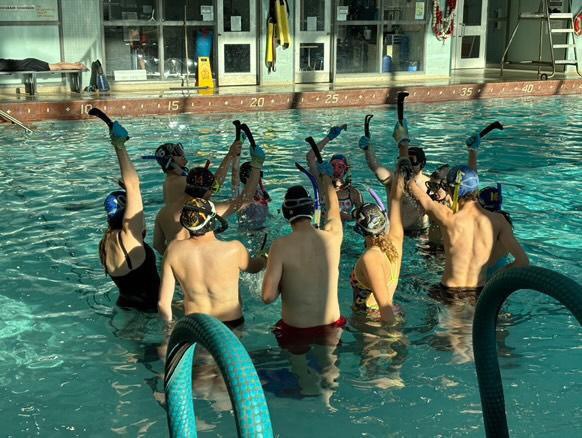
If triathlon is about endurance and balance, underwater hockey is about teamwork and breath control — yes, it’s exactly what it sounds like. Players dive into the pool with snorkels, fins, and small sticks to push a puck along the bottom, a sport so unique that only a handful of universities in Canada have teams.
“Our club wants to create a great beginner learning experience for new players and encourage them to continue playing after university,” says one of the club’s organizers via Instagram. “Underwater hockey is a very small, tight-knit community in Canada, so we’re proud to be part of its growth.”
Founded in early 2024, the club started with just three members and zero funds. Through grit and creativity, they’ve built a thriving team of a dozen regular players. “We got grants from the Math Endowment Fund and the Canadian Underwater Games Association to help us get started,” they explain. “More recently, WUSA supported us as we [hosted] our first-ever tournament this February.”
The club’s funding journey reflects the resourcefulness of many student-run teams. “Membership fees cover maybe 10 per cent of our costs each term, mostly pool rental, which can be up to $900,” they say. To make up the rest, the team turns to Krispy Kreme sales, bake sales, and tournaments. “We’ve thought about raising fees, but we really don’t want that to discourage new players.”
Practices are a mix of beginner-friendly sessions and competitive scrimmages, often guided by experienced players or visiting coaches. “When top coaches come in, it’s great, we get quality training. But most of the time, our practices are member-led, which helps build trust and makes it easier for newer players to learn,” they explain.
Beyond practice, the club embraces collaboration and fun, co-hosting “Try-Tri” events with Quadball, Quizbowl, and the Lifesaving Club, where members swap sports for the day and end with pizza socials. “We’re a very close community,” the executive says. “There’s something about niche sports, they attract people who just click.”
While recruitment and equipment remain ongoing challenges, the club’s spirit is undeniably strong. “When we started, we had three people. Now, we’re hosting tournaments and competing against other universities. We’re really proud of that.”
Clubs that keep campus moving
Both the Triathlon Club and the Underwater Hockey Club show how student initiative fuels Waterloo’s athletic scene beyond varsity boundaries. They may not compete in packed arenas or under bright stadium lights, but they embody the same drive and teamwork that define Warriors everywhere.
Whether you’re diving into a pool or pedaling around Ring Road, these clubs remind us that sport at Waterloo isn’t just about medals, it’s about community, creativity, and carving out space for everyone to play.